
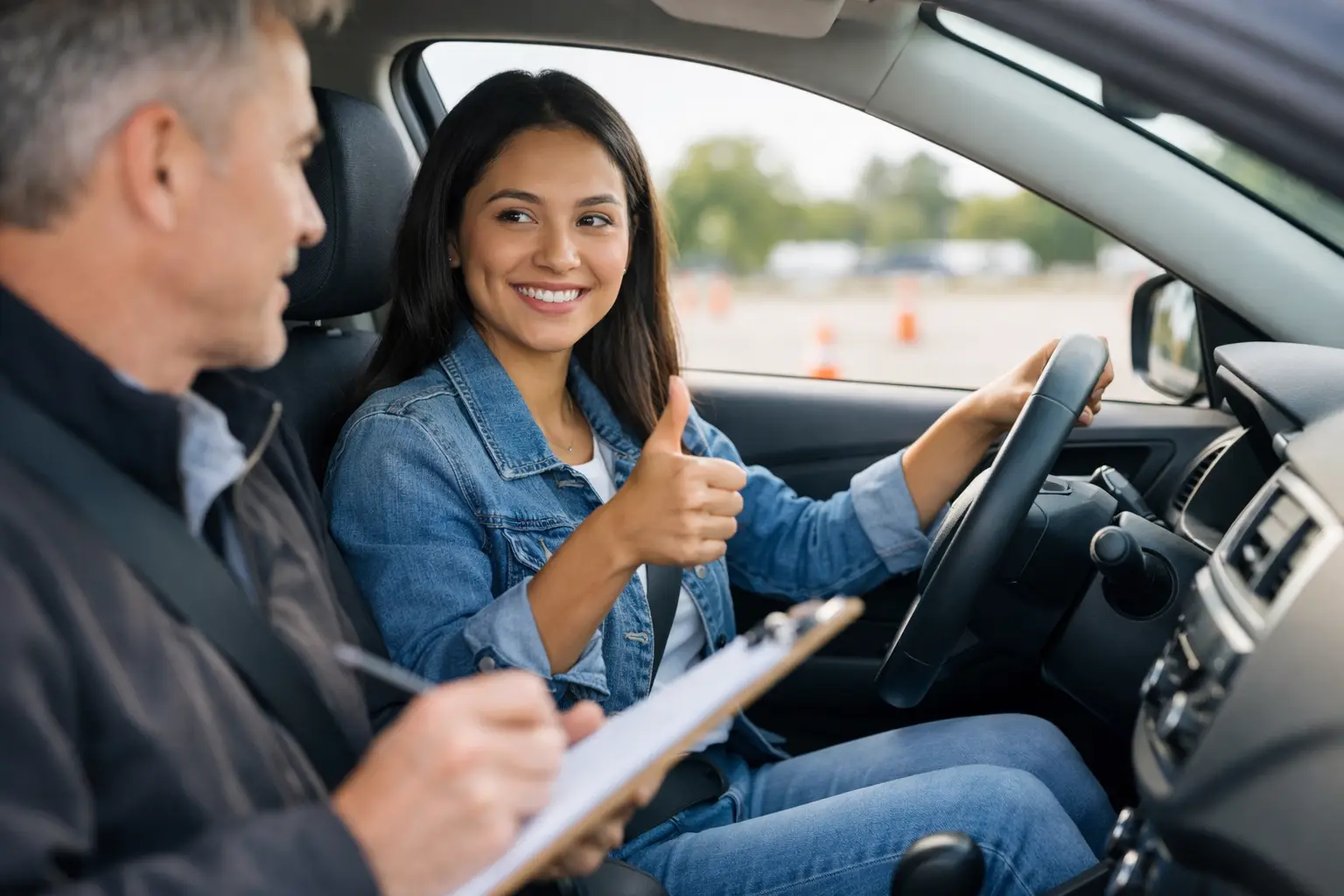
The road test is short, but it asks a new driver to show many skills at once: vehicle control, observation, safe decisions, and the ability to stay calm when an examiner is watching. That is why effective DMV road test preparation is not about memorizing a route or trying to predict every instruction. It is about building driving habits that hold up on any familiar or unfamiliar street.
For teens, adult beginners, returning drivers, and parents helping a new driver prepare, the best approach is steady and practical. Practice should make driving feel more predictable, not more stressful. When the test day arrives, the goal is simple: drive safely, legally, and with clear awareness of the road around you.
Start With the Skills the Examiner Can See
A DMV examiner cannot see whether you studied hard or how many times you have driven around the neighborhood. They can see your actions. Strong preparation focuses on repeatable behaviors that demonstrate safe judgment from the moment the test begins.
Before moving the vehicle, get comfortable with the basic setup. Adjust the seat so you can fully press the pedals and maintain a relaxed bend in your arms. Set the mirrors, fasten your seat belt, confirm the parking brake status, and know where the defroster, headlights, turn signals, windshield wipers, and hazard lights are located. A driver who has to search for controls is more likely to feel rushed once the test starts.
During the drive, the examiner will be watching for smooth steering, appropriate speed, complete stops, useful mirror checks, signaling, and proper lane position. The details matter because they reflect how well you manage risk. For example, stopping before the limit line or crosswalk protects pedestrians. Checking over your shoulder before changing lanes helps you identify traffic that mirrors may not show.
Do not try to make every movement exaggerated. A natural, consistent visual scan is better than turning your head so dramatically that you lose focus on the road ahead. Your goal is to make safe observation a normal part of driving.
Build DMV Road Test Preparation Around Real Situations
A parking lot is a good place to learn basic control, but test readiness comes from practicing on actual streets. That means handling intersections, residential areas, traffic signals, lane changes, bicyclists, parked cars, and changing traffic speeds without becoming overwhelmed.
Start with lower-pressure routes and add complexity gradually. A nervous first-time driver may begin with right turns, stop signs, and smooth braking in a quiet neighborhood. Once those actions become more automatic, practice left turns at controlled intersections, lane changes on multi-lane roads, and driving near busier shopping areas. Moving too quickly into difficult traffic can reduce confidence, while staying only on empty streets may leave a driver unprepared.
In the South Bay, drivers often encounter wide boulevards, busy intersections, school-zone traffic, cyclists, and neighborhoods with narrow streets and parked vehicles. These are useful conditions to practice because they require attention and patience. Still, practice should be matched to the learner. A new driver does not need the most difficult road in Torrance or Redondo Beach to build solid skills. They need a calm progression that gives them time to process what they see and make safe choices.
Practice Stops Until They Are Consistent
Many test-day errors happen at stop signs because drivers focus on the next turn instead of the stop itself. Practice approaching each stop at a controlled speed, braking smoothly, and coming to a complete stop in the correct location. Then look carefully for pedestrians, cross traffic, and other road users before proceeding.
A rolling stop may feel minor in everyday traffic, but it signals a weak safety habit. Make the full stop routine automatic: reduce speed early, stop completely, scan, and go only when the path is clear.
Make Lane Changes Deliberate
Lane changes are another area where preparation pays off. The process should be steady: check mirrors, signal in advance, check the blind spot, move when there is adequate space, and cancel the signal after entering the lane. Avoid drifting across lane markings or forcing your way into a tight opening.
If a safe opening does not appear, keep driving in your lane. Missing a turn is usually far safer than making a sudden maneuver. Examiners are looking for sound judgment, not perfect navigation.
Learn to Handle the Most Common Test-Day Tasks
The specific directions on a road test can vary, but several driving tasks deserve focused practice. Pulling away from a curb, pulling back to a curb, making right and left turns, backing in a straight line, and parking all require control and observation.
For curbside maneuvers, use the turn signal, check mirrors and blind spots, and approach slowly. Keep the vehicle reasonably close to the curb without hitting it. When backing, look through the rear window as needed and move at a pace that allows you to correct safely. Relying only on a backup camera is not a substitute for looking around the vehicle.
Parking practice should include more than finding an open space. Work on entering slowly, centering the vehicle, recognizing when you need to straighten out, and checking for pedestrians or moving vehicles before backing out. If parallel parking is difficult, break it into small steps with an instructor or experienced supervising driver. Consistent reference points can help, but understanding the vehicle's position matters more than memorizing one exact sequence.
Use a Mock Test to Find Gaps
A mock road test is one of the clearest ways to turn practice into preparation. Ask a qualified instructor or experienced driver to give directions with minimal coaching for 15 to 20 minutes. Treat it like the real test: no reminders about mirrors, speed, signals, or stops unless safety requires intervention.
Afterward, review patterns rather than isolated mistakes. Maybe the driver checks blind spots well but brakes too late at stops. Maybe turns are smooth, but lane selection becomes confusing at larger intersections. One or two patterns can become the focus of the next lesson.
This approach is especially useful for students who feel ready until someone evaluates them. A mock test gives them a chance to experience that pressure in a supportive setting. It also helps parents separate normal beginner mistakes from skills that need more targeted professional instruction.
Prepare the Vehicle and Yourself
Test-day readiness begins before you arrive at the DMV. Use a vehicle that is safe, familiar, and properly equipped. Make sure it has enough fuel, functioning brake lights and turn signals, working windshield wipers, current registration and insurance documentation, and tires in safe condition. If the vehicle has a warning light or mechanical issue, address it before the appointment rather than hoping it will not matter.
Arrive with time to spare. Rushing into the parking lot can create anxiety before the test begins. Take a few calm breaths, review the controls, and remind yourself that the examiner is evaluating safe driving, not looking for a reason to fail you.
During the test, listen fully before acting. If you do not understand a direction, ask for clarification. Do not guess, panic, or make a last-second turn. If you make a minor error, keep going safely. One imperfect moment does not mean the entire drive is over, but a distracted reaction can create a larger problem.
Choose Support That Matches the Driver
Every learner reaches test readiness differently. Some students need help with the final details, such as curb parking and lane changes. Others need additional time to become comfortable in traffic, especially after a long break from driving or a previous unsuccessful test. There is no benefit to rushing a driver who is still tense behind the wheel.
Professional road-test preparation can provide an objective assessment, structured practice, and feedback that is easy to act on. At South Bay Driving School, lessons are designed to meet drivers where they are, whether that means building first-time confidence or refining skills before a California DMV appointment.
The strongest preparation leaves you with more than a passing score. It gives you the calm, observant habits that protect you, your passengers, and everyone sharing the road long after the examiner asks you to pull back into the DMV parking lot.