
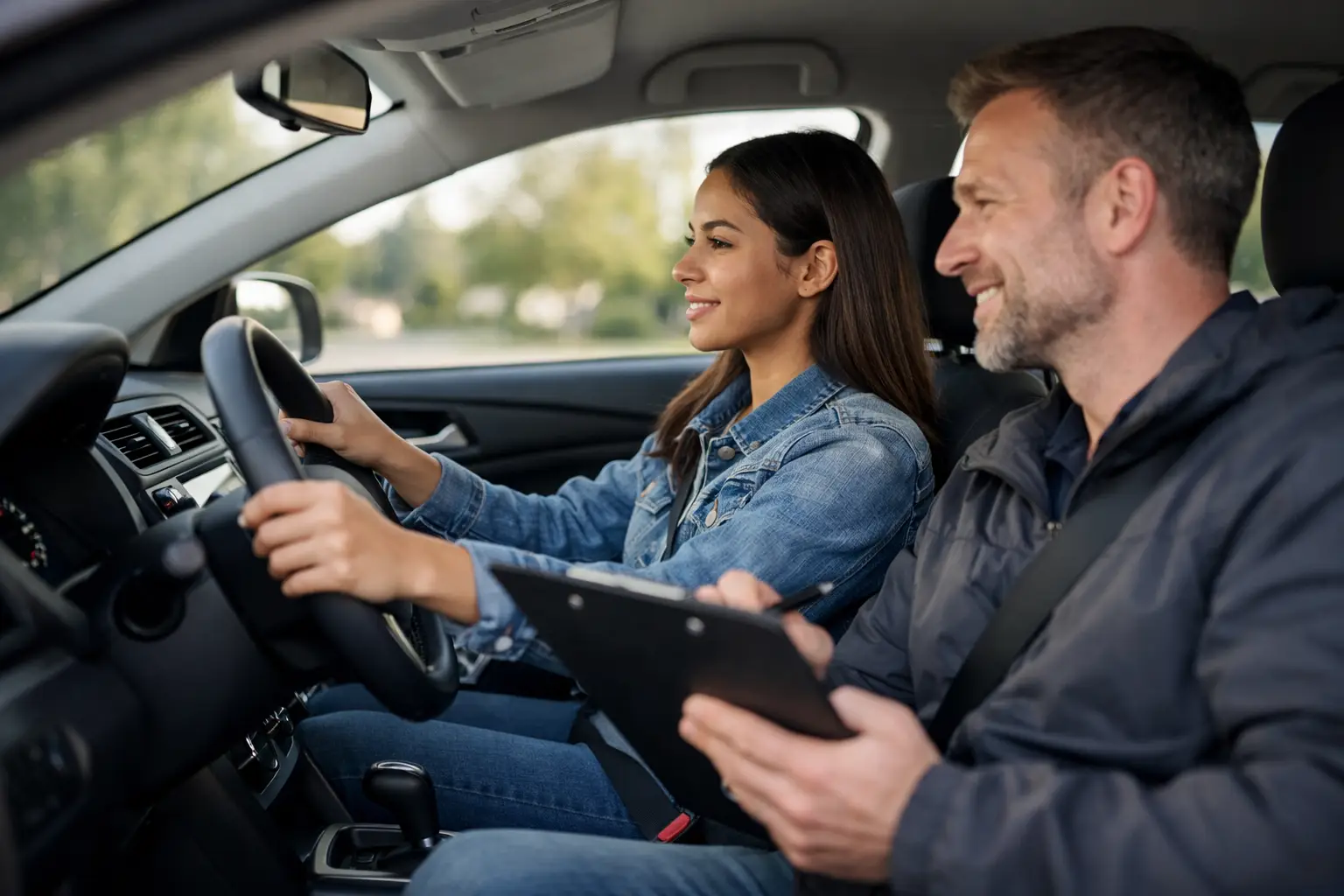
A student can explain the right-of-way rule perfectly and still freeze when traffic begins moving around them. That is where private behind the wheel driving lessons make a meaningful difference. One-on-one instruction gives a new, returning, or nervous driver room to ask questions, make corrections, and practice at a pace that supports real confidence.
For South Bay families, driving is rarely limited to one predictable route. A new driver may need to handle busy Torrance intersections, neighborhood streets in Redondo Beach, parking lots near Manhattan Beach, freeway entrances, school traffic, and the changing visibility of coastal mornings. Safe driving requires more than checking boxes for a license. It requires calm decision-making that holds up when the road feels unfamiliar.
Why Private Behind the Wheel Driving Lessons Work
A private lesson is not simply time spent in a car. It is focused coaching built around the student in the driver’s seat. An experienced instructor can see whether a student is gripping the wheel too tightly, braking late, missing mirror checks, turning too wide, or hesitating when it is safe to proceed. Those small habits are easier to correct early than after they become automatic.
For teens, private instruction creates a clear bridge between online driver’s education and family practice. Driver’s education explains the rules, but behind-the-wheel training helps students apply them while managing steering, speed, traffic signs, pedestrians, and other drivers at the same time. Parents still play an essential role in supervised practice, but professional lessons can establish the foundation and give families a consistent standard to reinforce.
For adult beginners and returning drivers, the value is often different. Some have driven in another country, some have gone years without driving, and some had a difficult experience that made them avoid the road. A patient instructor can start with the skills that need attention instead of assuming every student belongs in the same lesson plan.
What Personalized Driving Instruction Should Cover
The first drive should not be treated as a test. It should help the instructor understand the student’s starting point, comfort level, and goals. A complete beginner may begin in a low-pressure area with seat position, mirror adjustment, smooth braking, steering control, and basic turns. A driver with more experience may need help with lane changes, defensive scanning, parking, or California DMV road-test preparation.
As a student develops, lessons should move from basic vehicle control to increasingly realistic conditions. That may include residential streets, multi-lane roads, controlled intersections, parking areas, and routes that require steady observation. The goal is not to rush into the most difficult road right away. The goal is to introduce challenge when the driver has enough control to learn from it safely.
A thoughtful lesson plan commonly focuses on three connected areas: vehicle control, traffic awareness, and decision-making. Vehicle control includes smooth acceleration, braking, steering, backing, and parking. Traffic awareness means using mirrors, checking blind spots, recognizing hazards, and maintaining space around the vehicle. Decision-making is the ability to choose a safe speed, judge gaps, follow right-of-way rules, and respond without panic when conditions change.
That progression matters. A student who is still struggling to keep a steady lane position may not be ready to focus heavily on complex freeway merging. On the other hand, a student who already has solid fundamentals may benefit from practicing the situations that create the most anxiety. Private instruction makes it possible to adjust without wasting lesson time.
California Requirements and Practice at Home
California teen licensing has specific education, training, and supervised-practice requirements. For many teens, professional behind-the-wheel instruction is part of the path from a learner’s permit to a provisional license, while parents or guardians help complete required practice hours. Because DMV rules and individual circumstances can change, families should confirm current requirements before scheduling a test.
The practical point is that professional lessons and home practice do different jobs. A driving instructor provides structured coaching, immediate safety feedback, and practice that is organized around skill development. A parent or guardian provides repetition over time, helping the student gain comfort in familiar and everyday driving situations.
Families get the best results when the two work together. After a lesson, ask the student what they practiced and which skill needs more repetition. If they worked on smooth stops, mirror checks, or left turns at intersections, use calm practice drives to reinforce that exact skill. Avoid turning every ride into a critique. One or two specific reminders are usually more helpful than a running commentary.
Choosing the Right Lesson Pace
More lessons are not automatically better if the student is overloaded, and long gaps between lessons can make it harder to build momentum. The right schedule depends on experience, availability, confidence, and the target licensing date.
A complete beginner may benefit from regular lessons close enough together to retain new skills. A teen preparing for a DMV test may need a focused series of sessions that addresses weak points and rehearses test-day routines. A returning adult driver may prefer shorter, lower-pressure lessons that gradually rebuild comfort before progressing to more demanding roads.
It is also normal for confidence to rise and fall. A student may feel capable in a quiet neighborhood, then become tense at a large intersection or while parking between other vehicles. That does not mean they are failing. It simply shows the next skill to practice. Good instruction treats nervousness as useful information, not something to dismiss or push through too quickly.
Local Roads Make Local Experience Valuable
The South Bay presents the kinds of conditions drivers will face after licensing: dense traffic, frequent pedestrian activity, varied speed limits, wide boulevards, narrow residential streets, and busy shopping-center parking lots. Learning on local roads helps students connect instruction to the places they will actually drive.
For example, parking practice may be especially useful for a student who expects to drive to school, work, or the beach. A driver who will commute may need extra practice with lane changes, traffic flow, and safe following distance. Someone living near Palos Verdes or San Pedro may want experience managing hills, curves, and changing sight lines. The lesson should reflect the driver’s real life, not just a generic route.
Convenience matters to families, too. Pickup and drop-off options for teen students can reduce scheduling pressure, especially when lessons need to fit around school, sports, and work. Online booking also makes it easier to plan training around permit dates, practice goals, and an upcoming DMV appointment.
Preparing for the DMV Road Test Without Driving Only for the Test
DMV road-test preparation is useful, but students should not be trained to memorize a route or perform for an examiner. The strongest preparation comes from building habits that work anywhere: complete stops, proper observation, controlled turns, correct lane position, safe speed, and steady responses to traffic conditions.
Before the test, a student should be comfortable with the vehicle they will use and understand the basic safety checks expected of a driver. They should be able to make decisions without needing constant prompts. Practice can include common test skills such as parking, backing in a straight line, intersections, lane changes, and appropriate responses to signs and signals.
Test anxiety is common, particularly for teens who know their parents are waiting for the result. A calm instructor can help separate the pressure of the test from the skills themselves. If a student needs more practice before testing, postponing can be the safer and less stressful choice. Passing matters, but becoming a capable driver matters more.
Questions Parents and Adult Learners Should Ask
Before choosing a driving school, look beyond the lesson price alone. Ask whether instruction is private, how the school assesses a student’s current abilities, and whether lessons can be tailored to goals such as beginner training, confidence building, manual transmission, or DMV preparation. It is reasonable to ask how scheduling works and whether pickup and drop-off are available in your area.
Experience and communication also matter. Students learn best when they feel safe enough to admit confusion, ask for another explanation, and make a mistake without embarrassment. For more than 35 years, South Bay Driving School has served local learners with that patient, safety-first approach.
A driver’s license is a milestone, but the more lasting result is a person who can make safe choices when nobody is sitting beside them. Give the learning process enough time, practice with purpose, and choose instruction that helps the driver leave each lesson more prepared for the next road ahead.